Entering your spending
This is the part of a template that takes ongoing effort. How much depends mostly on how many purchases you make, and how long you let them pile up.
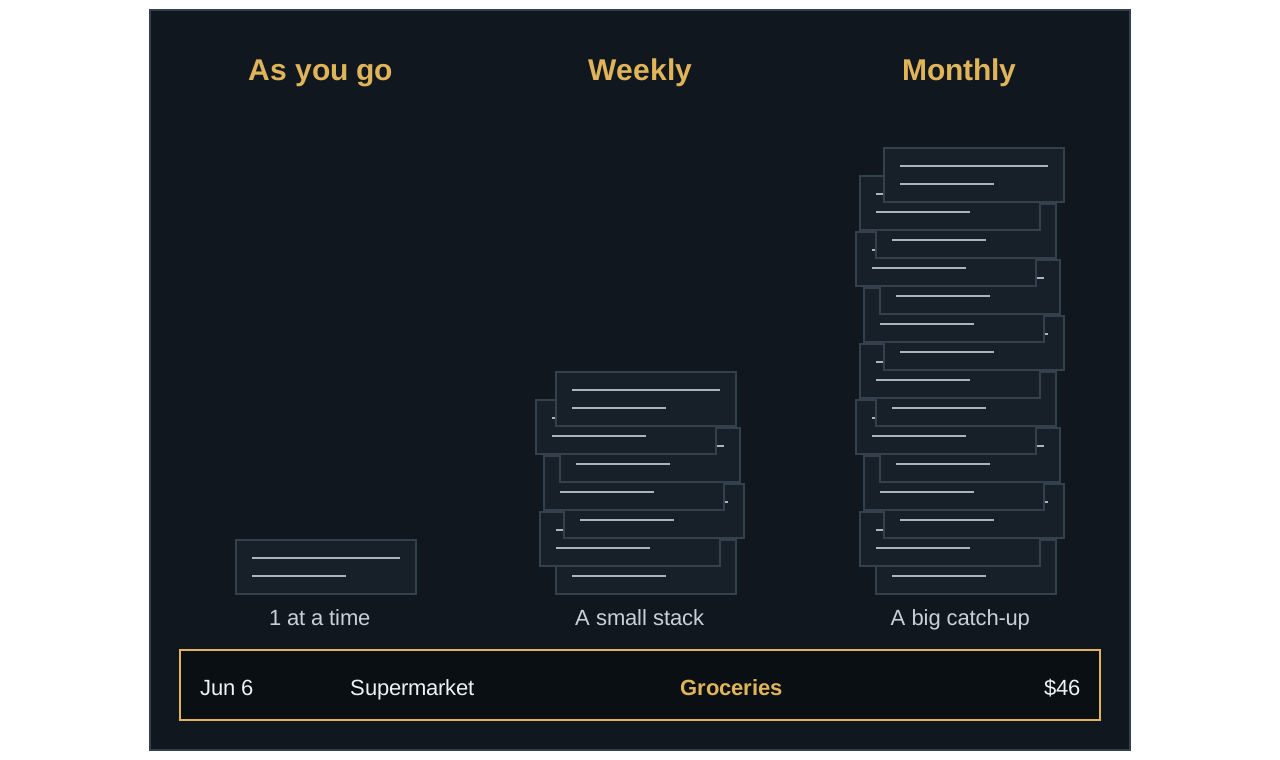
1 of 4
It starts with one line
Each entry usually needs a date, a short description, a category, and an amount. On its own, that’s small.
2 of 4
As you go
Adding purchases soon after you make them keeps the details fresh, but it’s easy to forget when you’re out.
3 of 4
Once a week
A regular catch-up means fewer interruptions, though small cash purchases can be harder to remember.
4 of 4
Once a month
You’ll have the fewest sessions, but each one is longer, and the month is over before you can change course.
Choose the rhythm you’ll keep.
The best routine is one you can repeat when you’re busy.
Choose a routine you’ll keep
| Routine | How it works | Good | Watch out for |
|---|---|---|---|
| As you go | Add each purchase soon after you make it | Details are fresh | Easy to forget when you’re out |
| Weekly | Set a regular time and catch up | Fewer interruptions | Harder to remember small cash purchases |
| Monthly | Catch up once at the end | Fewest sessions | A long session, and little chance to change course |
If tracking feels like too much, try starting with one week at a time. Your receipts or banking app can help you remember what you spent.
Common snags
Templates handle these differently, so check its instructions first. These are common approaches.
I missed a week or more
Don’t start over. Use your receipts or banking app to catch up on the larger items, then continue. An imperfect record is still useful.
One purchase covers two categories
Enter it as two lines with separate amounts, or put it all in the main category if the difference doesn’t matter to you.
See how to handle refunds, credit cards, transfers, irregular bills, and more
Making it easier to keep going
- Use fewer categories. You’ll make fewer decisions for each entry.
- Attach it to a habit. Link your catch-up to something you already do each week.
- Aim for useful, not perfect. Rounding a small amount won’t change the picture.
If entering spending is what keeps stopping you, that’s useful to know. A different kind of tool may suit you better than a more elaborate template.